Red Fruit Co-Ferment Decaf
$
15
/lb
Sebastian’s Red Fruit is a game-changer — a remarkable coffee with an intense strawberry and chocolate profile. Having it now as a decaf is incredible. Seeing that its distinctive cup profile remains opens the door to new consumers and clients. It’s decaffeinated with Ethyl Acetate, removing nearly 97% of its caffeine while preserving its flavor profile, making it an outstanding offering.
Taste Profile
Variety

Buy this coffee
Contact us to buy this green coffee for your roastery
How this coffee was produced
This coffee is processed the same way as the Red Fruit Co-Ferment and then decaffeinated trough an EA Decaf process
Harvesting
Coffee is hand-picked and sorted, where 95% are fully ripe
Processing and Fermentation
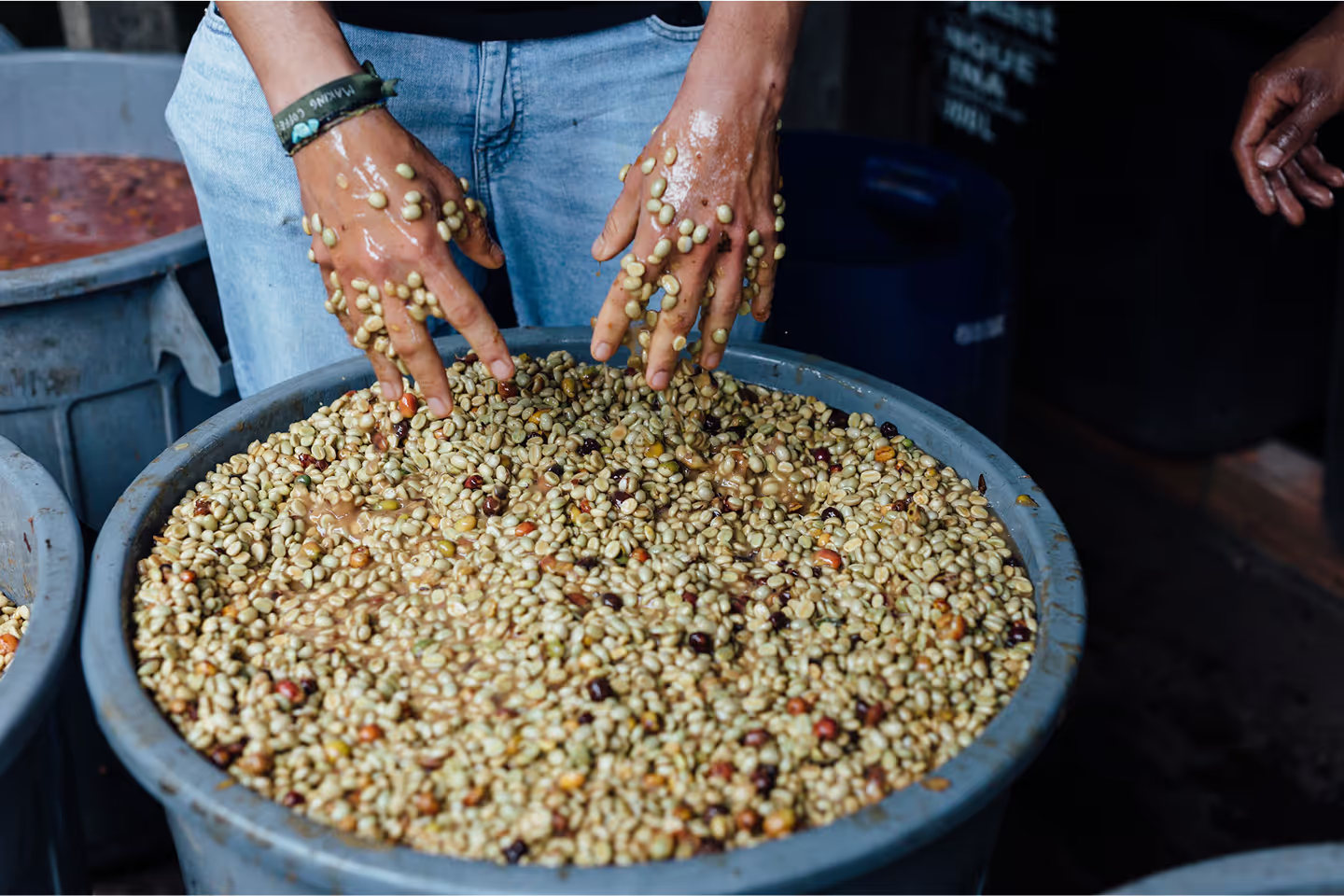
Fist, an anaerobic fermentation using wine yeast, dehydrated strawberries, fruit glucose, and pH monitoring. for 120 hours. Later, coffee is depulped and placed in tanks for a 72-hour anaerobic fermentation with CO2 injection.
Drying and Decaffe
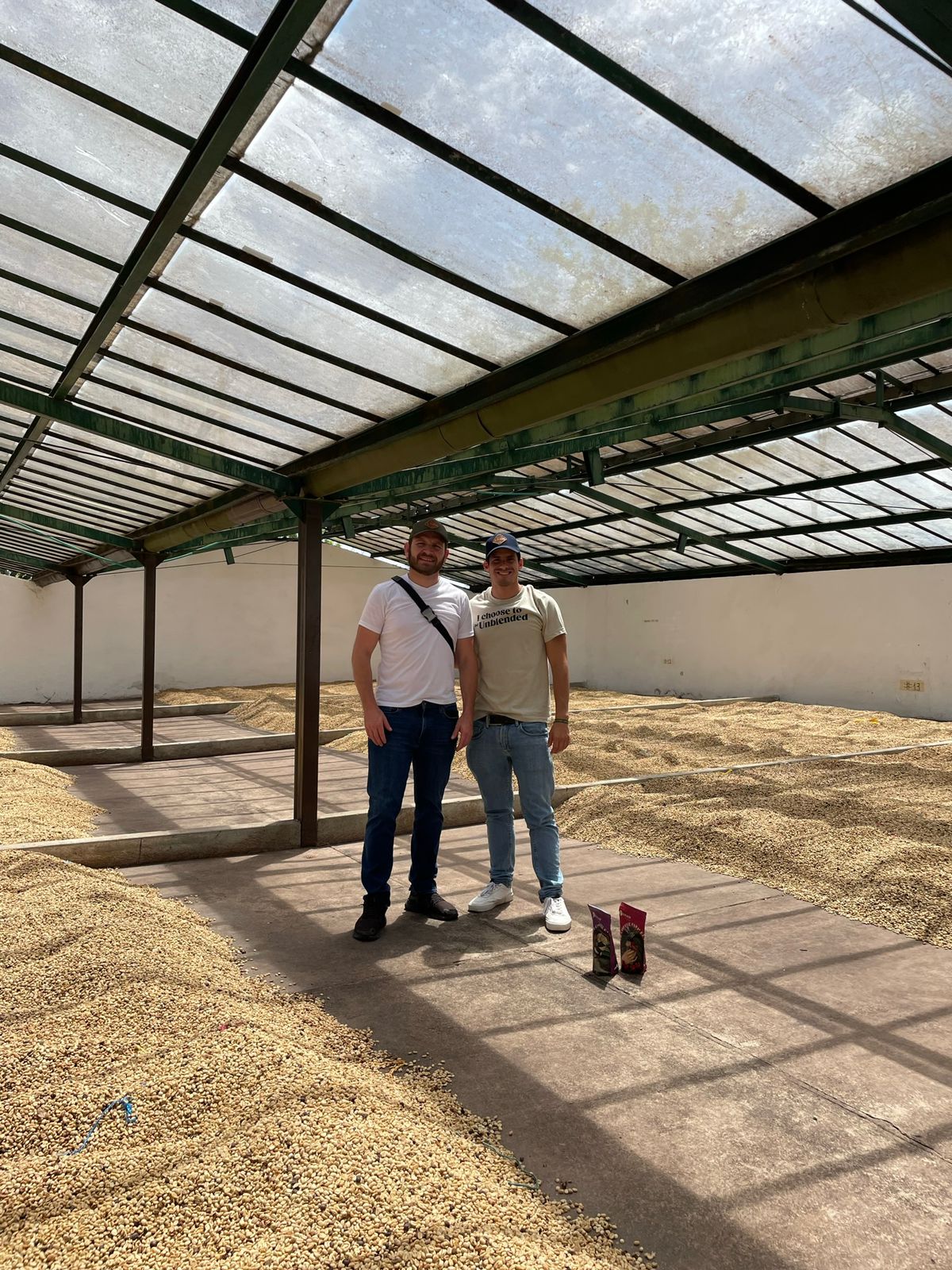
Dried in open patios at a controled temperatured of 40 degrees celcisus, with a 2-phase drying in shade lasting around 5 days. After milled it is sent to the Decaf facility for an Ethanyl Acetate (EA) decaf process where 97% to 99% of its caffeine is taken out

Sebastian Ramirez
A fourth-generation coffee farmer, Sebastian specializes in Carbonic Maceration & varietal innovation, pushing the boundaries of specialty coffee.
El Placer
Sebastian's farm operates as a processing facility rather than a traditional coffee farm. In the 1980s, it was a large coffee estate in Quindío, but today, only half of its original production remains active. He oversees the purchase of cherries grown on the farm and sources select specialty varieties from Huila—currently, his Geisha and some Pink Bourbon come from there. Sebastian is responsible for processing and developing flavor profiles, ensuring the highest quality in every batch. Additionally, he has recently acquired a new farm, where he plans to focus on cultivating more exclusive varietals such as wush wush, Sl 28, etc. that are not easily grown in his region.
1800 m
24 Hectares & 10 employees (50 during harvest)
Caturra, Pink Bourbon, Gesha, Wush Wush, Sidra, Typica Mejorado, Papayo, SL-28
October - Dec (Availability Year Round)

Stay Connected
Get updates on inspiring young producers, new product releases, and exclusive insights from the field.